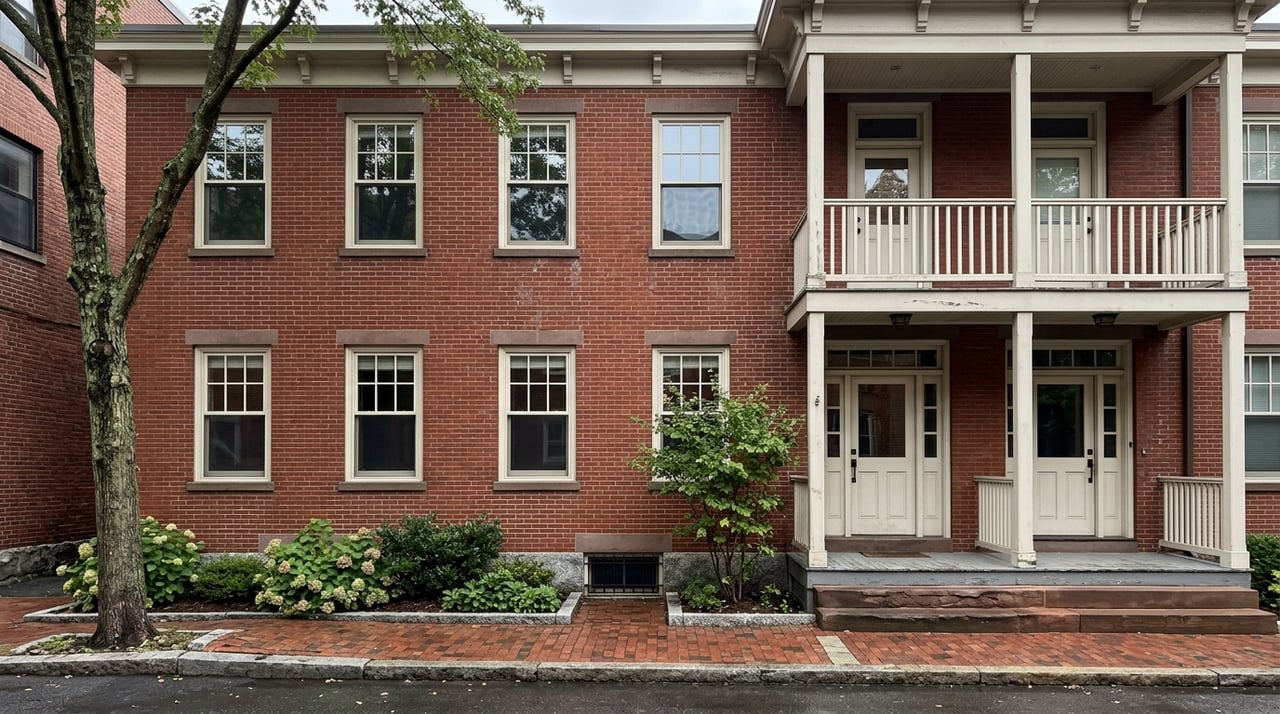
If you are looking at Somerville multifamily real estate, you already know this is not a market where rough math is enough. Prices are high, inventory is tight, and many buildings come with older systems, compact layouts, and a meaningful permitting layer. The upside is that Somerville also offers strong renter demand, transit access, and a housing base built around small multifamily properties. In this guide, you will get a practical framework for underwriting Somerville more carefully and more confidently. Let’s dive in.
Why Somerville Draws Investors
Somerville is a small city of about 4 square miles, and that physical constraint matters. Limited land, strong transit access, and a renter-heavy housing base all help support long-term demand for multifamily housing.
Public data reinforces that picture. According to U.S. Census QuickFacts for Somerville, the city has 81,045 residents, a 34.2% owner-occupied housing rate, median household income of $132,572, and median gross rent of $2,517. City planning materials also show that affordability pressure remains a central issue, with housing costs rising sharply over the past decade and market-rate supply staying tight alongside 3,907 income-restricted units in early 2024, equal to 10.8% of year-round housing stock.
Demand Drivers Behind the Market
Somerville's demand story is tied to location and mobility. The Green Line Extension added five new Somerville stations, and the Community Path Extension opened in 2023, improving access across East Somerville, Union Square, Gilman Square, Magoun Square, and Ball Square.
For investors, that means many properties are valued more like close-in urban assets than like conventional suburban multifamily. You are underwriting not just a building, but access to transit, jobs, and established neighborhood nodes.
Understand the Cash Flow Reality
Somerville often rewards appreciation, repositioning, and unit-turn upside more than immediate yield. The city's consolidated plan notes that median home value rose from $459,300 in 2009 to $845,700 in 2022, while median contract rent rose from $1,138 to $2,228 over the same period.
That does not mean cash flow is irrelevant. It means you should be careful not to force a high-cash-flow thesis onto a market that often prices around scarcity, future rent growth, and long-term exit value.
Somerville Building Stock Matters
A major reason underwriting gets tricky here is the age and type of housing stock. The city's 2024 Consolidated Plan says that about 55% of housing units are in 2-4 unit buildings, while 30% are in multifamily buildings with 5 or more units.
That small-building mix is one of the defining features of the Somerville market. If you are buying a two-family, three-family, or triple-decker, you are participating in the local norm, not a niche asset class.
Older Buildings Need Larger Reserves
The same city plan says about 80% of residential buildings were built between 1900 and 1939, 60% of housing units predate 1940, and 82% were built before 1980. In practical terms, older roofs, windows, heating systems, insulation, accessibility issues, rodent mitigation, and lead paint concerns should be part of your baseline review.
That is why conservative capex assumptions matter so much in Somerville. In many deals, renovation risk is not optional or occasional. It is part of the operating model.
Unit Size Shapes Strategy
Somerville's housing stock also skews smaller in many rental settings. City planning materials note that renters are more likely to occupy studios and one-bedroom units, and that it is common to see 2-bedroom units at 800 square feet or less and 1-bedroom units under 600 square feet.
This is important when you compare a local property to newer product elsewhere. Efficient layouts, not suburban-style square footage, often drive the best use case in Somerville.
How to Underwrite Rent the Right Way
One of the easiest mistakes in Somerville is using one rent number as if it tells the whole story. It does not. Different sources measure different slices of the market.
A better approach is to use multiple rent benchmarks and treat them as separate lenses.
Key Rent Benchmarks to Know
According to Census QuickFacts, median gross rent is $2,517. RentCafe's Somerville rent data shows a March 2026 average rent of $3,410, with 1-bedrooms at $3,134, 2-bedrooms at $3,968, and 3-bedrooms at $5,040. Redfin's rental market data, cited in the research, shows an average rent of $3,436 citywide, with neighborhood medians such as Davis Square at $3,000, East Somerville at $3,000, Assembly Square at $3,360, and West Somerville at $3,850.
These numbers are useful, but they are not interchangeable. Census data reflects occupied stock, while listing platforms reflect active market conditions.
Why Small Investors Need Property-Level Rent Work
RentCafe specifically notes that its data is based on apartment buildings with 50 or more units. That means it is not a direct stand-in for a three-family, a triple-decker, or a smaller mixed-condition building.
If you are evaluating a smaller Somerville multifamily property, citywide averages are only a starting point. Your underwriting should rely on property-specific rent surveys, realistic unit condition assumptions, and a clear distinction between in-place income and stabilized income.
Zoning and Permitting Can Change the Deal
Somerville is not a single-use, one-size-fits-all market. Its current zoning structure includes Neighborhood Residence, Urban Residence, Mid-Rise, High-Rise, commercial districts, Assembly Square Mixed-Use, and other special districts, as shown in the city's zoning atlas and map service.
That layered zoning framework matters because many investment opportunities depend on whether you are simply renovating, changing layout, expanding, or pursuing a larger redevelopment idea.
What the Zoning Structure Signals
Somerville's zoning materials show that the ordinance is transit-oriented. In Neighborhood Residence districts, several building types are permitted by right, and within the half-mile transit area, additional forms such as multiplexes, apartment houses, and rowhouses may also be allowed by right under the zoning framework described in the city's zoning materials.
For investors, the takeaway is simple. You should never assume every parcel has the same redevelopment or expansion path, even if nearby properties look similar.
Approval Path Affects Timing
The city's zoning boards and officials page explains that the Zoning Board of Appeals handles Site Plan Approval or Special Permits in Neighborhood Residence, Urban Residence, and Tufts University districts, while the Planning Board handles these reviews in Mid-Rise, High-Rise, commercial, and certain special districts.
The city also requires a pre-submittal meeting with staff for zoning permits. So even a modest value-add or reconfiguration plan can involve real entitlement time, which should be reflected in your carrying-cost assumptions.
Renovation Rules Matter in Older Stock
Somerville's Building Division states that a building permit is required before construction, alteration, repair, demolition, or sign installation. Interior gutting requires a building permit, and total teardowns require a demolition permit.
For 3-family and larger properties, a licensed contractor must obtain the permit. On older buildings, lead-safe renovation requirements also matter, especially in pre-1978 housing where disturbed painted surfaces may trigger specific compliance steps.
Neighborhoods Are Not One Market
Somerville works best when you think of it as a cluster of submarkets. The city's community meetings page groups local areas by ward, including East Somerville and Assembly Square in Ward 1, Winter Hill and Ten Hills in Ward 4, Magoun Square and Ball Square in Ward 5, Greater Davis Square in Ward 6, and West Somerville and Teele Square in Ward 7.
That local variation matters for entry price, rent potential, tenant profile, and renovation strategy.
Davis Square
Davis Square is one of the clearest premium submarkets in the city. According to Redfin's Davis Square housing market page, the median sale price is $1.75 million, with a median rent of $3,000 cited in the research.
This area is often better suited to buyers focused on long-term appreciation and location-driven demand than to buyers chasing immediate yield.
East Somerville
Redfin's East Somerville market page shows a median sale price of $1.01 million, with a median rent of $3,000 cited in the research. Compared with Davis Square, that can represent a lower entry point within a transit-oriented growth corridor.
For some investors, East Somerville can be a more practical value-add or owner-occupant multifamily play, especially when paired with a realistic renovation budget.
Assembly Square and Union Square
Assembly Square stands apart as a redevelopment and mixed-use story. The city reports that its adopted Assembly Square neighborhood plan could support roughly 2,900 to 5,700 new residential units over time.
Union Square also reflects a transformation thesis tied to public investment. The city's Union Square planning page connects the neighborhood's planning work and streetscape redesign to the Green Line Extension and broader development activity.
Winter Hill, Magoun, West Somerville, and Teele
These areas are often better understood as established residential submarkets with older building stock. Research cited for this article notes that Redfin rental data shows higher rents in West Somerville at $3,850 and premium pricing near the Tufts area.
For investors, these neighborhoods may call for a more traditional small-multifamily lens: building condition, layout efficiency, and street-by-street pricing discipline.
A Practical Somerville Underwriting Checklist
Before you move forward on a multifamily purchase in Somerville, it helps to slow down and pressure-test the assumptions.
Use this checklist as a starting point:
- Verify zoning and permitted use for the specific parcel
- Separate in-place rent from projected market rent
- Adjust rent expectations for building size and unit condition
- Budget more aggressively for capex in older housing stock
- Confirm permit requirements before pricing renovation scope
- Account for entitlement timing if expansion or reconfiguration is part of the plan
- Include the city's Community Preservation Act surcharge in your operating expenses
- Underwrite for conservative debt-service coverage, not best-case rent growth
- Keep the appreciation thesis separate from the cash flow thesis
The Bottom Line on Somerville Multifamily
Somerville can be an excellent multifamily market for investors who value scarcity, transit access, and long-term upside. It is less forgiving for buyers who underestimate renovation costs, overgeneralize rent comps, or assume every small building can be repositioned quickly.
The most durable investment decisions here usually come from disciplined underwriting, neighborhood-level analysis, and a realistic view of what older-stock multifamily ownership involves. If you want a data-driven sounding board as you evaluate a Somerville acquisition, Michelle Roloff can help you think through pricing, renovation scope, and market-specific strategy.
FAQs
What makes the Somerville multifamily market different from a typical suburban market?
- Somerville combines limited land, strong transit access, a renter-heavy housing base, and older small multifamily stock, which often makes deals more dependent on careful underwriting, repositioning, and appreciation.
How should you estimate rents for a Somerville multi family property?
- Use multiple data points, including occupied-stock rent and listing-based rent, then verify property-specific comps because large-building averages may not reflect small multifamily assets like two-families and triple-deckers.
What building issues should investors expect in Somerville multifamily properties?
- Many properties are older and may need work on roofs, windows, heating systems, insulation, accessibility, lead-safe renovation compliance, and other deferred maintenance items.
What zoning issues should you review before buying a Somerville investment property?
- You should confirm the parcel's zoning district, permitted uses, approval path, and whether your plan involves by-right renovation, a permit-triggering alteration, or a longer entitlement process.
Which Somerville neighborhoods should multifamily investors compare?
- A practical shortlist often includes Davis Square, East Somerville, Assembly Square, Union Square, Winter Hill, Magoun Square, West Somerville, and Teele Square because each area can present different price points, building types, and investment strategies.