Wondering why one Back Bay condo sells quickly while another sits, even when they seem similar on paper? If you are planning to sell in today’s market, pricing is where strategy matters most. The right number is not about chasing last year’s peak or copying a nearby listing. It is about reading the current data, your building, and your competition clearly so you can attract serious buyers without leaving money behind. Let’s dive in.
Back Bay pricing needs precision
Back Bay remains one of Boston’s premium condo markets, but the numbers show a more nuanced picture than many sellers expect. In March 2026, Redfin reported a Back Bay median sale price of about $1.434 million and 66 median days on market. Realtor.com showed a much higher median listing price of $2.179 million, while Zillow’s home value index for Back Bay was $1,337,259 with homes going pending in about 61 days.
Those different figures do not mean the data is unreliable. They reflect different methods, listing mixes, and time windows. What they consistently show is a high-value market where pricing still matters and where broad neighborhood averages can only take you so far.
Back Bay also sits well above the broader Boston and Greater Boston condo markets. Boston’s March 2026 median listing price was $966,250, and Greater Boston condos had a median sale price of $720,000 according to the Massachusetts Association of Realtors. That gap is one reason generic pricing formulas tend to miss the mark in Back Bay.
Start with recent closed sales
The best first step is to look at recent closed sales, ideally from the last three to six months. In a neighborhood with changing inventory and a meaningful spread between asking prices and final sale prices, older comps can distort your strategy.
Back Bay’s Q1 2026 condo report showed 47 closed units, an average sale price of $2.96 million, average sale price per square foot of $1,579.55, average 108 days on market, and sale price at 96.01% of list. Those averages are useful for context, but they also show why sellers need to be careful. A small sample and a strong luxury mix can make averages look more dramatic than your specific unit’s real market position.
That is why same-building sales usually carry the most weight. If your building has recent trades, they often tell you more than a broad Back Bay average ever could. Buyers compare floor plans, finishes, service level, fees, and amenities closely, especially in premium condo stock.
Not all of Back Bay prices the same
One of the biggest pricing mistakes is treating Back Bay as a single market. It is not. Micro-location matters.
Realtor.com’s March 2026 figures showed notable differences across Back Bay subareas:
- Back Bay East: $2.674 million median listing price
- Back Bay West: $1.680 million median listing price
- Columbus: $1.499 million median listing price
- Prudential–St. Botolph: $1.637 million median listing price
Days on market also varied across those areas. That means a condo can be overpriced simply because it was benchmarked against the wrong slice of the neighborhood.
If your home is near the Public Garden, the Prudential area, or a different part of the neighborhood with a different building mix and buyer pool, your pricing strategy should reflect that. This is where a hyper-local approach becomes especially valuable.
Adjust for your building, not just your unit
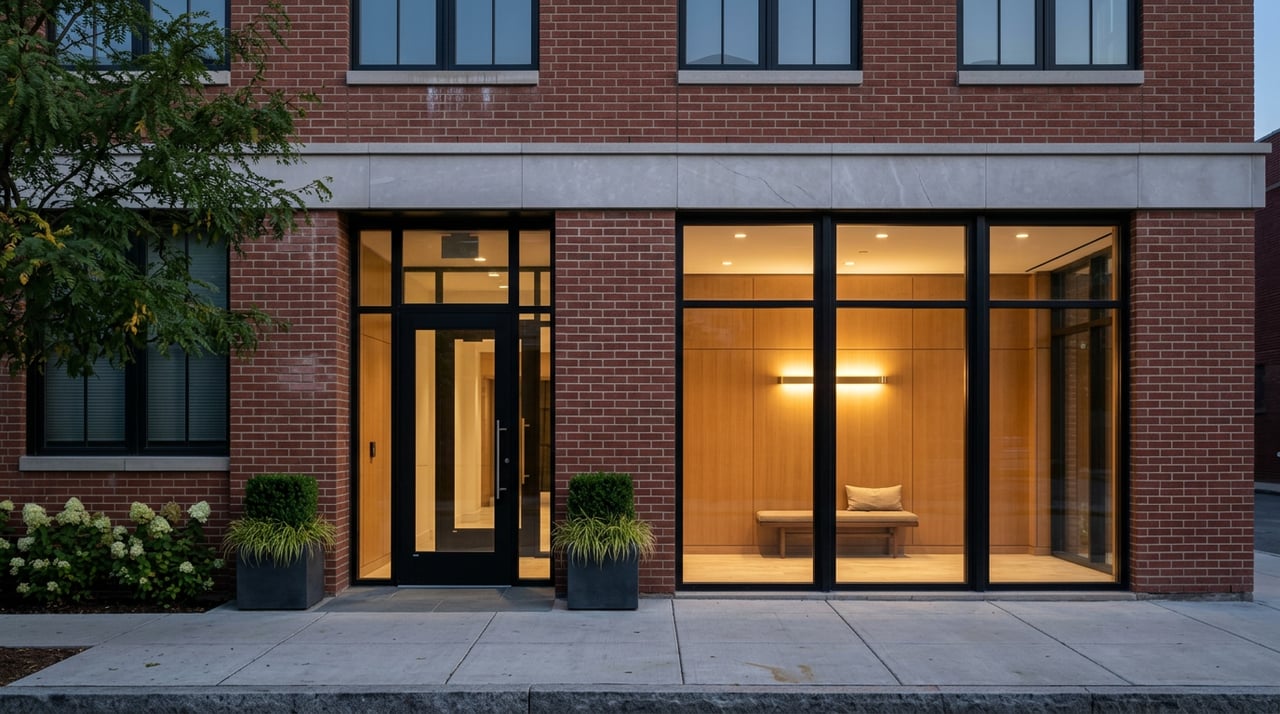
In Back Bay, buyers are often evaluating the building as much as the residence. A polished lobby, elevator access, concierge services, well-managed common areas, and stronger amenity packages can all shape how a unit is perceived against the competition.
Monthly carrying costs matter too. Condo dues affect affordability, and buyers pay close attention to them in a higher-rate environment. Research cited in the report notes that association finances, reserve funds, special assessments, and litigation can also affect value and mortgage eligibility.
In simple terms, two similar condos may not command the same price if one sits in a building with lower fees and steadier finances. If your building has advantages, those should be factored into the pricing conversation early. If there are drawbacks, it is usually better to account for them upfront than to test the market with an overly ambitious ask.
Price parking clearly
Parking deserves its own pricing discussion in Back Bay. Boston changed curb access in the neighborhood in March 2024, removing 125 meters and converting many spaces to resident permit parking. The city also reported residential Back Bay averaging only one to two open spaces per block.
That tighter curb environment makes deeded parking more meaningful to many buyers. If your condo includes parking, the value should be reflected explicitly in the pricing strategy and marketing. If parking must be purchased separately, that should also be handled clearly so buyers can compare your listing accurately.
Renovation quality can move value
Not all updates are equal, and buyers usually know the difference. Boston buyer-trend data from Redfin’s Spring 2026 feature analysis suggests that homes described with features like en suite bathrooms, new kitchens, crown molding, storage areas, wet bars, game rooms, and full gyms achieved some of the strongest sale-to-list performance.
For a Back Bay seller, that supports a simple point: quality and usability matter more than vague claims of being updated. A thoughtful renovation, smart storage, and attractive building amenities may justify pricing near the top of your range. A dated interior, limited storage, or less functional layout may call for a more conservative approach.
This does not mean every upgraded condo gets a premium automatically. It means the improvements need to be real, relevant, and visible to buyers comparing your home against current alternatives.
Watch the live competition
Closed sales tell you where the market has been. Active listings show you where your condo will compete right now.
That matters in Back Bay because inventory is not trivial. Realtor.com reported 151 homes for sale, while Zillow showed 120 for-sale listings as of March 31, 2026. Back Bay’s Q1 2026 condo report also showed 104 active condo units and 4.16 months of supply.
If buyers can choose among many strong alternatives, your list price needs to make sense on day one. An overpriced listing often does not look premium. It looks stale.
That is especially important in a market where sale-to-list ratios have softened. Realtor.com reported a 96% sale-to-list ratio in Back Bay, and the Q1 condo report showed an average 96.01% of list price received. Those numbers suggest buyers are still active, but they are not ignoring value.
Use a pricing range, not one magic number
A smart pricing strategy is usually a price band, not a single perfect figure. You are balancing recent sales, current competition, your building profile, and buyer payment sensitivity.
Mortgage rates are part of that equation. Freddie Mac reported the average 30-year fixed rate at 6.30% on April 30, 2026. In that kind of financing environment, buyers often react strongly to monthly payment changes, which makes them more selective about headline price and monthly dues.
In practical terms, the best list price is often a disciplined position within a reasonable range:
- Near the top of the range for renovated units with strong views, parking, full-service features, or standout building appeal
- In the middle for well-presented condos with solid but not exceptional competitive advantages
- Near the lower end for dated units, walk-ups, heavier fees, or homes facing stronger direct competition
This approach helps you avoid emotional pricing. It also gives you a clearer framework for deciding whether you want to prioritize speed, pricing power, or a balance of both.
Avoid the most common pricing mistakes
Back Bay sellers often run into the same few issues. Most are avoidable with the right prep and a realistic read on the market.
Using last year’s market as the benchmark
A prior peak can be hard to let go of, especially in a neighborhood with long-term prestige. But today’s buyers are shopping in today’s rate environment and against today’s inventory. Your condo needs to be priced for current conditions, not memory.
Relying on broad neighborhood averages
Back Bay averages can be skewed by luxury penthouses, boutique buildings, or a small number of very high-end closings. Those figures are useful background, but they are not enough to set a list price on their own.
Ignoring fees and assessments
Buyers do not evaluate price in isolation. They look at total monthly cost. Higher dues or uncertainty around building expenses can affect what buyers are willing to pay.
Comparing too loosely with nearby areas
Some buyers do cross-shop Back Bay with the South End, Beacon Hill, or Fenway-Kenmore. But those comparisons need careful adjustment for location, building type, finish level, and lifestyle tradeoffs. A Back Bay condo should not be priced off another neighborhood without a clear reason.
What a strong pricing process looks like
If you want the simplest version of the strategy, it looks like this:
- Review same-building closings from the last 3 to 6 months.
- Expand to the most comparable Back Bay micro-market if needed.
- Adjust for parking, renovation level, views, amenities, fees, and service level.
- Compare against current active and pending competition.
- Choose a list price within a realistic range, not at the edge of wishful thinking.
That process is methodical by design. In a neighborhood like Back Bay, careful pricing is not about being conservative. It is about being credible.
If you are preparing to sell, the goal is not simply to name a high number. It is to position your condo so buyers understand its value quickly and act with confidence. That is often what leads to a stronger outcome.
When you want a pricing strategy that blends hard data with building-level judgment and polished execution, Michelle Roloff can help you map the right plan for your Back Bay sale.
FAQs
How should you price a condo in Back Bay, Boston?
- Start with recent same-building closed sales, then adjust for your Back Bay micro-market, renovation level, parking, condo fees, and current competition.
What is the average sale-to-list ratio for Back Bay condos?
- Back Bay’s Q1 2026 condo report showed sellers receiving an average of 96.01% of list price, which supports careful pricing from the start.
Does deeded parking increase Back Bay condo value?
- In many cases, yes. Boston’s curb and parking changes in Back Bay have made parking more limited, so deeded parking can be an important value factor.
Do condo fees affect Back Bay pricing?
- Yes. Buyers often weigh monthly dues alongside mortgage payments, so a building with higher fees or financial uncertainty may support a lower sale price than a similar low-fee building.
Should you compare a Back Bay condo to South End or Beacon Hill sales?
- Only with caution. Some buyers cross-shop those neighborhoods, but pricing should first rely on same-building and same-submarket comps before using nearby areas as adjusted reference points.