If two South End condos have nearly the same square footage, why can their values land so far apart? In this neighborhood, buyers are not just pricing bedrooms and baths. They are pricing block feel, historic character, usable space, and how a home fits into daily life. If you are buying, selling, or simply trying to understand South End pricing, it helps to know which features consistently shape value. Let’s dive in.
South End pricing starts with context
South End condo values sit inside a neighborhood with a very specific physical and market identity. Boston Planning describes the South End as the largest Victorian residential district in the United States, and Boston.gov identifies it as a landmark district known for 19th-century red-brick rowhouses, parks, and major thoroughfares.
That setting matters because buyers are often responding to more than a unit itself. They are responding to a preserved streetscape, recognizable architecture, and a sense of place that is easy to read from block to block.
The broader price backdrop is also strong. Redfin reported a South End median sale price of $1,287,067 and a median price per square foot of $1.21K in May 2026, with homes selling in about 23 days. Those are neighborhood-wide figures rather than condo-only numbers, but they help frame the value range buyers are working within.
Boston Planning also reports 19,214 housing units in the South End, with 1,607 net new units completed from 2020 to 2025. In a market with both historic homes and newer inventory, small differences in product quality and location can have an outsized effect on price.
Block quality often drives the premium
Residential blocks feel different
One of the biggest value drivers in the South End is the block itself. The neighborhood was laid out as a grid of rowhouse streets around squares and small parks, and that original pattern still shapes how buyers perceive value today.
WBUR notes that the area is anchored by rowhouses around central gardens, including streetscapes like Union Park Street and Worcester Square. Boston.gov also points to major corridors such as Tremont Street, Columbus Avenue, and Massachusetts Avenue, while highlighting Shawmut Avenue as a tree-lined street with boutiques and restaurants.
In practical terms, many buyers pay more for addresses that feel distinctly residential and preserve that classic garden-square atmosphere. A condo on a quieter brownstone block may compete differently from a similar-sized unit on a busier commercial or transit corridor.
Streetscape affects first impressions
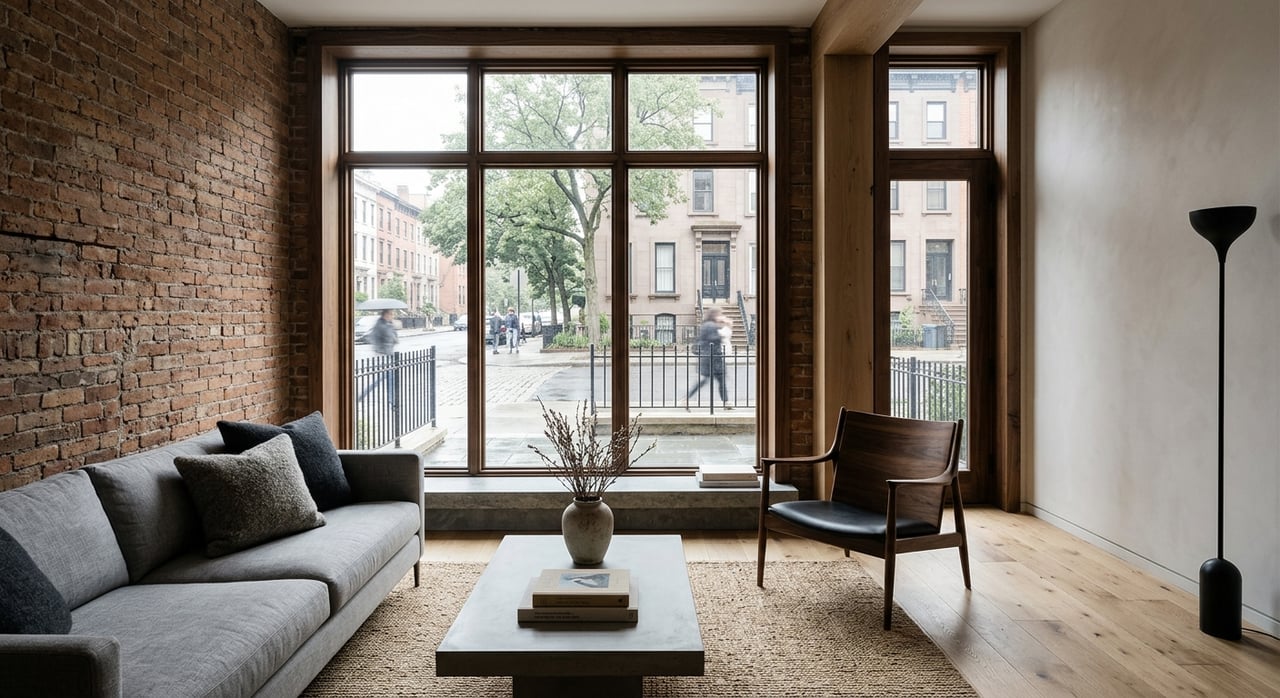
In the South End, exterior setting is part of the product. Connected brick facades, bay windows, iron railings, stoops, and proximity to small parks all contribute to the emotional and visual appeal buyers notice right away.
Boston.gov highlights Blackstone and Franklin Parks, and Boston Planning notes the neighborhood’s many small parks. When a condo benefits from a polished, intact streetscape near those open-space anchors, that can support stronger buyer interest and resale appeal.
Historic integrity is more than curb appeal
Exterior details carry weight
Because the South End is a landmark district, building condition and renovation quality matter in a very specific way. The South End Landmark District standards identify street-facing facades, visible roofs, entry steps, doors, masonry, and railings as key features subject to review.
Those standards favor repairs that duplicate original materials and proportions. That means buyers are often reacting not just to whether a building looks updated, but to whether the work feels appropriate to the architecture.
A well-maintained brownstone exterior, careful masonry work, and preserved stoops can support value because they protect the building’s character. By contrast, deferred exterior maintenance or less thoughtful visible alterations may narrow the buyer pool.
Renovation quality matters inside too
Inside the unit, renovation quality still matters, even if public data does not always capture it cleanly. In the South End, many condos are conversions within older rowhouses, so thoughtful layout decisions and finish choices can have a strong effect on how the home lives.
Buyers often respond best when updates feel consistent with the building’s age and proportions. A polished renovation that respects the architecture can make a condo feel more timeless, while a generic renovation may not capture the same premium.
Usable volume can outperform raw size
Ceiling height changes perception
Square footage is important, but it is not the whole story. In many South End condos, especially smaller homes in older buildings, usable volume can be just as influential as floor area.
Realtor.com found that listings with 10 to 11 foot ceilings correlated with materially higher average listing price per square foot than homes with standard 8 to 9 foot ceilings, with a larger premium in the 12 to 15 foot range. This is not a South End-specific study, but the logic fits the neighborhood well.
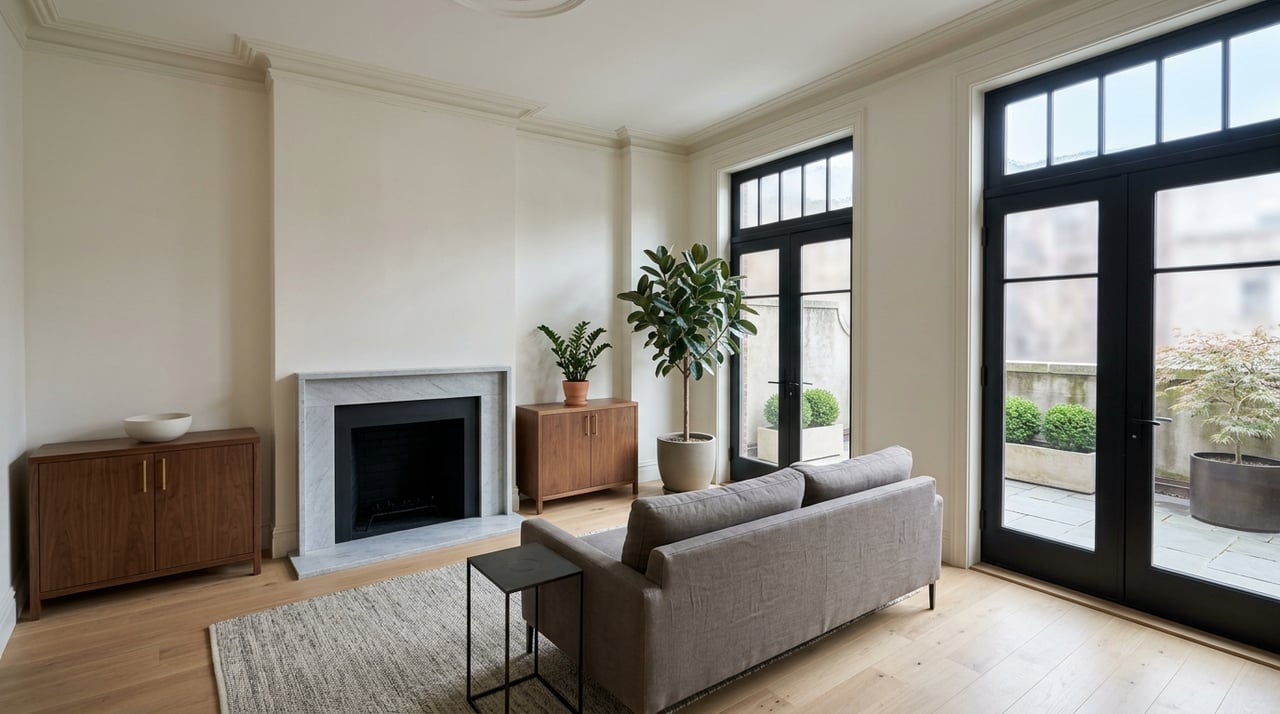
Higher ceilings can make compact spaces feel brighter, larger, and more comfortable. In an older brownstone conversion, that extra headroom can materially change buyer perception even when the unit footprint stays the same.
Floor plan efficiency still counts
A South End condo with strong ceiling height but awkward circulation may not realize the full benefit. Buyers are usually weighing how open, flexible, and functional the space feels from everyday use, not just what the square footage says on paper.
That is why two condos with similar measurements can trade differently. One may simply offer better volume, light, and flow.
Outdoor space adds real appeal
Private outdoor space often stands out in the South End. The neighborhood already has strong access to parks, gardens, and open space, but a balcony, terrace, patio, or roof deck still offers a kind of daily convenience and privacy that shared amenities cannot fully replace.
Research cited in the report found a positive value effect from balconies in apartment housing. While that study was not specific to Boston, the takeaway is relevant in a dense urban neighborhood where outdoor access is limited and highly visible in buyer decision-making.
In the South End, private outdoor space can feel especially valuable because it complements the neighborhood’s urban rhythm. A small deck off the kitchen or a roof deck with room to sit may not add many square feet, but it can add meaningful lifestyle value.
Parking can widen the buyer pool
Parking is another feature that can significantly affect condo values, even in a walkable neighborhood. Boston Planning reports that 37.6% of South End households had no vehicle in 2025, while 29.6% of residents walked to work and 17.4% used public transit.
Those numbers show why many buyers are comfortable living in the South End without a car. At the same time, they also help explain why deeded parking can stand out when a buyer does want one. It is not assumed, and that scarcity can matter.
Boston.gov notes that the Washington Street and Silver Line corridor carries more than 24,000 bus riders a day. Strong transit access supports demand across the neighborhood, but for buyers who drive regularly, deeded parking can materially improve convenience and resale marketability.
A parking study cited in the report found that condo parking spaces carry implicit value rather than functioning as free add-ons. In the South End, that aligns with what many buyers and sellers already see in practice.
Amenities support demand and resale
Dining and arts strengthen appeal
The South End draws demand partly because it offers a strong neighborhood experience beyond the front door. Boston.gov describes the area as home to notable restaurants and a thriving arts community, while Visit Boston emphasizes fine dining, arts, and nearly 30 parks.
Boston Center for the Arts operates from the historic South End, and SoWa identifies itself as an art and design district with restaurants, studios, galleries, and an open market. These are not minor lifestyle details. They help shape how buyers think about convenience, identity, and long-term appeal.
Proximity helps daily livability
WBUR notes that the neighborhood’s dining scene attracts visitors from outside the area and that proximity to Back Bay, the Prudential Center, and Newbury Street adds to the appeal. For condo values, nearby access to these anchors can support both everyday livability and future resale interest.
That does not mean every condo near an active corridor commands the same premium. It means well-balanced access to parks, restaurants, arts destinations, and core Boston destinations can strengthen demand, especially when paired with a desirable residential setting.
How to compare two South End condos
If you are trying to explain why one South End condo commands more than another, start with a short checklist:
- Is the condo on a classic residential block or a busier corridor?
- How intact and well-maintained is the building’s historic exterior?
- Does the unit feel spacious because of ceiling height and layout, not just square footage?
- Is there private outdoor space?
- Is parking deeded?
- How close is the home to parks, restaurants, arts destinations, and neighborhood anchors?
These are often the clearest variables behind pricing gaps between two otherwise similar properties. In the South End, value is usually a mix of architecture, livability, and location precision.
For sellers, that means pricing should account for more than bedroom count and square footage. For buyers, it means understanding which features are truly scarce and which are easier to replace.
South End condo values are rarely random. They are usually the result of a few highly legible factors playing out in one of Boston’s most architecturally distinct neighborhoods.
If you want help evaluating how your condo’s specific block, renovation level, or feature set fits today’s South End market, schedule a private strategy session with Michelle Roloff.
FAQs
What drives South End condo values more than size alone?
- In the South End, buyers often weigh block quality, historic character, ceiling height, private outdoor space, parking, and amenity access alongside square footage.
Do quiet South End blocks usually command higher condo prices?
- Many buyers place a premium on classic residential blocks with preserved rowhouse streetscapes, garden-square character, and nearby small parks versus busier corridors.
Does historic renovation quality affect South End condo resale value?
- Yes. In a landmark district, careful maintenance of facades, masonry, stoops, railings, and other visible architectural details can support buyer appeal and value.
How important is outdoor space for a South End condo?
- Private outdoor space can be a meaningful differentiator because it adds usable lifestyle value in a dense urban setting, even in a neighborhood with many parks.
Does deeded parking increase South End condo value?
- It can. Many residents live car-light or car-free, but deeded parking is still a scarce feature that may improve convenience and broaden buyer appeal.
Why do two similar South End condos sell at different prices?
- Small differences in address quality, building condition, ceiling height, outdoor space, parking, and access to parks, dining, and arts destinations can create noticeable pricing gaps.